一直以来,艺术的本体论在中国始终未被人们关注,甚至提及,当代艺术批评及艺术史的实践都在试图绕开这一无法被绕开的问题,甚至没有意识到这一关键领域的存在。这表现为,一方面是对作品所涉的社会及心理内容的描述和归纳僭越了对艺术活动及作品本身的感知与分析,另一方面,是把作品匆匆还原为社会态度或政治观点。我们的关键词不是“反映”与“表现”,就是“批判”或“表达”,总之,不是一种贫乏的现实主义思维模式,就是一种浮泛的后现代主义思想框架。
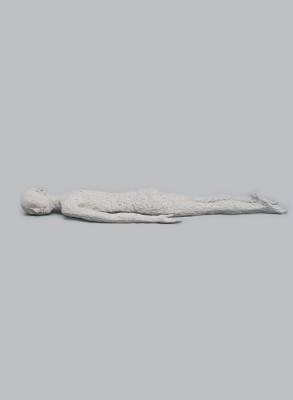
陈秋林, 趴着, 废纸,雕塑, 175x50x18cm,2009.
然而,艺术如何才能是反映与表现,又如何才能构成有效的批判与表达?这是一个回避不了的问题。把艺术作为认识的途径的,或者实践的工具,这些都是艺术的某种可能的“身份”,但是艺术的“身体”到底是什么?这就已经提出了一个本体论的问题。当代艺术的本体论,即思考“艺术是什么”,这不是在寻求一种表象化的智识性的艺术定义,而是在沉思艺术的“当下上手状态”,换句话说,是在为艺术而“烦”。
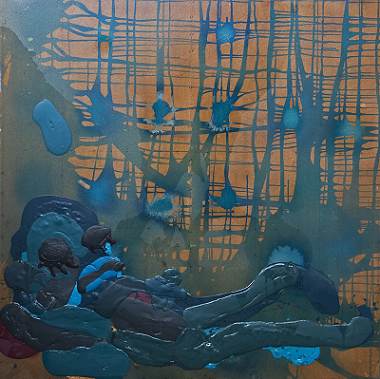
关音夫,怎么睡着的怎么醒来的?木板丙烯及综合材料, 240x240cm, 2008.
通常,艺术品被认为是一种物化的结果,艺术活动被理解成一种物化的过程,即主体、精神、形式、内容及心灵的施行过程,在这里,物的本真状态被纳入到了一个表征结构之中了,物成为了被施行的对象。于是,艺术被视为一面映照着自然或社会的镜子,或者一块容纳了精神与思想的空地,本体的问题遂被忽略。
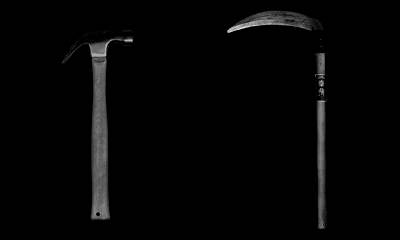
肖雄 , 唯物主义 , 图片,72x120cm, 2006, Ed.8.
但在这个展览中,我们把艺术中的物理解为某种屏障,而不是一种容器。在这里,“物”涵盖了客体、物质、材料、媒介及身体,它是对所有异质性因素的召唤,它抵抗着表征的同一性驯化,但又不得不处于某种表征关系中。而在这种关系中,艺术活动的真正价值即是不断地反思既定的表征实践,让世界在表征的遮蔽(Lethe)中闪现出无蔽(Aletheia),这正是艺术在本体论视域中的真理性。因此,我们用“物之屏”这个概念来形容艺术活动所真正面对的问题——异质性的在场。
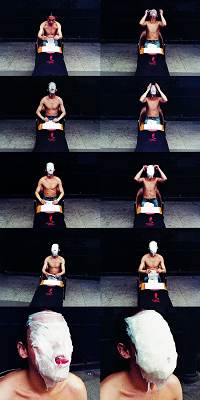
余极, 舐纸呼吸 No.1, 行为录像, 2002.
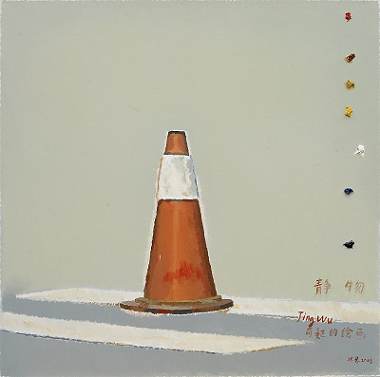
张慧,可疑的绘画-静物No.2,布面油画,190x190cm,2008.
Obstruction
Director: A Thousand Plateaus Art Space
Art Director: Liu Jie
Curator: Bao Dong
Artists: Chen Qiulin, Guan Yinfu, Xiao Xiong, Yu Ji, Zhang Hui
Opening: July 28th 2009, 3pm
Exhibition Time: July 28th – Sept. 30th, 2009
Exhibition Venue: A Thousand Plateaus Art Space, 87 Fangqin Jie, Chengdu
Ontological questions on art have not yet been raised in China. Contemporary art critics and art historians seem to avoid this question. Some do not even seem to realize its importance, although its key position in art research is abundantly evident. The reason for this neglect is twofold. In the first place, the emphasis on the social and psychological content of art works has so far dominated the perception and analysis of art events and the art works itself. Secondly, art works have too often and too quickly been forced into a political and society- related interpretation. Therefore, our main focus should not be limited to a mere ‘reflection’ or ‘display’, but should broaden its scope to ‘critique’ and ‘expression’. Our concern should not be based on a poor modern thinking pattern but should depart from a rich post-modern frame of thought.
How does art ‘reflect’ or ‘display’ and, more important, how can art effectively ‘critique’ or ‘express’? This is a question essential to our understanding of art. Whether art is a theoretical thoroughfare or a practical tool, they are all equally possible identities of ‘art’. But every identity is also intrinsically connected to a body. This question on the body of art is in se ontological in nature. In its reflection on the nature of art, contemporary art ontology is not looking for a representational and epistemological definition of art. It rather aims to reflect on the ‘ready-to-hand’ (Zuhandenheit) status of art, which means in other words, being ‘concerned’ (Sorge) about art.
Art works are often seen as a result of materialization. Art events are understood as a process of materialization, as a way of processing subject, mind, form, content and soul. Objects have entered a representational structure and as such are being ‘processed’. In this context, art is seen as the mirror of nature or society. It is an empty space containing mind and thought, but where the ontological question is slowly being neglected.
In this exhibition we see the art object not as a representation but as an obstruction. The object is a veil that covers subject, substance, material, medium and body. It rallies all heterogeneous elements and opposes a one-sided homogeneous representation. At the same time however, the object can not be but subsumed under this representational relation, for it is in this relation that art events can solidify their real value in being a continuous reflection on the established representational art practice. By lifting the ‘unconcealment’ (Aletheia) from the ‘concealment’ (Lethe), the essential truth of art ontology reveals itself. Therefore we have chosen Obstruction as title of this exhibition, since the real question that should preoccupy art events is the presence of heterogeneity.
|