马德里提森波那米萨美术馆展出美国画家理查德•伊斯特斯作品
2007年9月16日,马德里提森波那米萨美术馆为美国画家、国际摄影写实主义主要创始人和领军人物之一理查德•伊斯特斯举办画展。33幅重要作品将为我们展示从60年代至今该画家的创作生涯。这些作品为理查德•伊斯特斯个人收藏和知名机构如芝加哥艺术学院、美国惠特尼艺术博物馆等的私家藏品。
此展览标志着提森波那米萨美术馆关注当代艺术这一新展览策略的又一个动向,新展览策略发起于去年的罗伯特•劳森伯格画展和新画室展览系列。理查德•伊斯特斯非凡的绘画技巧令人折服,其作品侧重描绘城市风景,主要取材于目前他所生活和居住的城市纽约,另外还有芝加哥、巴黎、威尼斯、旧金山和巴塞罗那等。
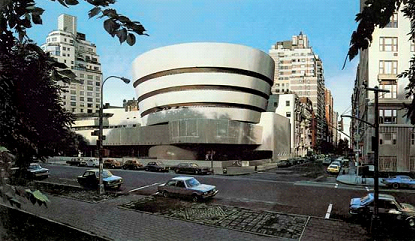
MADRID, SPAIN.- The Thyssen-Bornemisza Museum inaugurates another exhibition devoted to a living artist; on this occasion the American painter Richard Estes, principal founder and one of the leading figures of international Photo-realism. A group of 33 of his most important works offer a complete survey of the artist’s career from the 1960s to the present day. The exhibition is on view through September 16, 2007.
The exhibition has been jointly organised with the Palazzo Magnani in Reggio Emilia and, in Madrid, with the collaboration of the Consorcio Turístico de Madrid. It marks another initiative on the part of the Thyssen-Bornemisza Museum within its new exhibition strategy to focus on contemporary art, launched last year with the exhibition on Robert Rauschenberg and the start of the new Studiolo exhibition series.
Among the works chosen for Richard Estes are particularly outstanding examples from the private collection of the artist himself, as well as loans from other private collections and prestigious institutions, such as the Art Institute of Chicago, the Whitney Museum of American Art, the Solomon R. Guggenheim Museum, the Marlborough Gallery, New York, the Portland Museum of Art, and the Toledo Museum of Art.
The painter of NewYork: Richard Estes was born in a small town in Illinois in 1936. Together with Malcolm Morley, Chuck Close and Duane Hanson he was one of the founders of the Photo-realist movement which arose in the US in the late 1960s. Through the use of photography as a direct visual source, Richard Estes has specialised in the representation of real landscapes. His work is admired for its extraordinary technical mastery, primarily to be seen in his celebrated views of the city of New York, where he currently lives and works.
Other cities such as Chicago, Paris, Venice, San Francisco and Barcelona have also been the subject of his gaze, but never as regularly as New York, with its focus on Manhattan, Central Park, Long Island, the bridges over the Hudson, and the city’s buildings, shops, vehicles and other forms of transport. Estes conveys the reality of a great metropolis, using and manipulating it to reveal his own version of reality and to expand and develop his own artistic vision. While he has on occasions defined himself as a realist painter, what really interests Estes is the construction of the painting and the visual impact of the work.
The illusionistic effect of Estes’ compositions suggests that they have been directly copied from a photograph. In fact, they are the result of a combination of various photographic shots which the artist has taken in situ. His interest lies not in copying them literally but in manipulating them and reconstructing them to create an image which, although scientifically incorrect, seems real to the human eye; a realist image but one that does not correspond to any specific moment in terms of light, colour or chance elements.
While Estes occasionally works in other genres, such as portraiture (of which an example is included in the exhibition), his most famous works are his urban landscapes depicting façades of buildings, shop windows, escalators, cars and fast-food restaurants. The human form is barely to be seen in these compositions, as Estes is not interested in it, and when figures appear they are simply presented as a further element in the landscape, often conveying a certain sense of isolation. Overall, an atmosphere of objectivity and lack of emotion is characteristic of Estes’ paintings.
Photo-realism arose from two artistic traditions: trompe l’oeil painting and the meticulous technique used to create the delicate but highly detailed finish of 17th-century Dutch painting. Artists such as Vermeer have been an important influence on Estes, particularly Vermeer’s detailed observation of reality and use of equipment such as the camera obscura. His work also looks back to the European tradition of urban view painting from its origins with the vedute painters of the 18th century led by Canaletto. More recent precedents may be found in the work of Charles Sheeler and the American painters of the 1930s who frequently used photography to achieve greater precision of line and form.
Reflection and reflections of reflections: In contrast to other Photo-realist painters who move directly from the photograph to the canvas, Richard Estes only uses the photograph as his starting-point. For the artist, the photograph is merely an instrument that allows him to capture the moment and all its complexities. Estes takes various shots of his chosen location in order to subsequently play around with them and devise the definitive image that appears on the canvas. The result is to make the painted image a sort of optical illusion, an enormously complex representation of refracted light. Obvious differences apart, the process is similar to that used by Canaletto to create his famous views of Venice: both artists depict real and recognisable buildings and places but they reorganise the perspective in order to achieve their desired effects. In addition, Estes plays brilliantly with reflections, another of the most characteristic and unique features of his work.
Effects of light and shade, and the particular texture of images produced by cameras are perfectly simulated in Estes’ work, particularly in the representation of highly reflective surfaces: shop windows, buildings with large windows, telephone booths, etc. These clean, inanimate surfaces often become the only motif in the canvas. Estes’ reality is conveyed through its reflection and as a result the world appears truly inverted, fragmented and distorted. On other occasions this reality is doubled; a wall divides two scenes, the interior and exterior of a bus, of a shop window, a boat, resulting in a juxtaposition of interior and exterior spaces, of real images and reflected ones, and of images reflected in the reflection of other images.
Richard Estes (Kewanee, 1932): Richard Estes was born in 1932 in Kewanee (Illinois). From 1952 to 1956 he studied painting and drawing at the Art Institute of Chicago, where he was able to see the work of Edgar Degas, Edward Hopper and Thomas Eakins, which formed part of that institution’s private collection. In Chicago, Estes primarily studied traditional academic painting and also focused on drawing. After he graduated he lived for six months in New York and worked for a further three months in Chicago before permanently settling in New York in 1959. In 1962 the artist lived and worked in Spain.
Up to 1966, Richard Estes earned a living from graphic design, working as an illustrator for various magazines and advertising agencies. He continued to study art in a self-taught manner and in 1968 held his first solo exhibition at the Allan Stone Gallery in New York.
In the 1970s the famous Ansonia building and adjoining streets on the Upper West Side were Estes’ favourite subjects. These settings would continue to appear in his paintings of the 1980s and 1990s. His art of those years can thus be seen as a reflection of the changes that took place in New York with the passing of time, although this is a secondary consideration, and what is most important is that these works reveal Estes’ artistic maturity and above all his capacity for permanent and ongoing artistic reinvention.
The artist’s earliest compositions with street scenes use a sloping reflection in which the street itself is reflected in a window or shop window located on the other side. In more recent works, Estes includes various streets that run off at different angles. In both cases, the artist invents methods to organise space and make the viewer move within and through the complex composition.