展览聚焦维也纳跨世纪的辉煌
加入到丝织博物馆于2008年1月6日通过克里姆特织品庆祝维也纳跨世纪的辉煌的活动中来,体验由画家古斯塔夫•克里姆特和其他艺术家引领的,并通过原有材料和照片可以看到的20世纪初维也纳生机勃勃的艺术和社会场景。关注分离主义运动和维也纳工作室,展览通过丝织作品审视那一时期的艺术价值和美学发展。
丝织博物馆创立了一个亲切的集中展览,聚焦那一时期由于艺术家起来反叛传统风格并创造新时代的艺术形式而引起的欧洲艺术的巨大改变。参展作品由丝织博物馆馆长丹尼尔•沃克馆长策展,共有四个部分,其中三个部分聚焦分离派和维也纳工作室艺术家的个人作品。第一部分展示建筑设计师约瑟夫• 霍夫曼的作品,此人也是分离派和维也纳工作室的创始人之一。作为维也纳工作室的主管,霍夫曼设计织品、家具和其他物品。馆长沃克说:“展现漫长创作生涯的多种风格,霍夫曼设计的著名织品简单明了,看起来就像是着有两色的几何图形。” 第二部分展示达哥伯特•佩谢的作品,此人为多产艺术家,曾为维也纳工作室设计了超过113件织品图案。他的图案被公认为最具独特风格,以精美表现自然主义的形式为特色,有时是大规模的重复。第三部分包含玛丽亚•莉卡兹•斯特劳斯的作品。据沃克称:“莉卡兹•斯特劳斯风格宽泛,融合了佩谢的花型风格元素和霍夫曼的几何图案。然而,她闻名于抽象图案的无限重复,而这反映了自1918年克里姆特逝世后多年来由装饰艺术风格引导的国际流行趋势。”第四部分则是自分离美学运动和维也纳工作室诞生以来织品设计的一个全方位集合体。
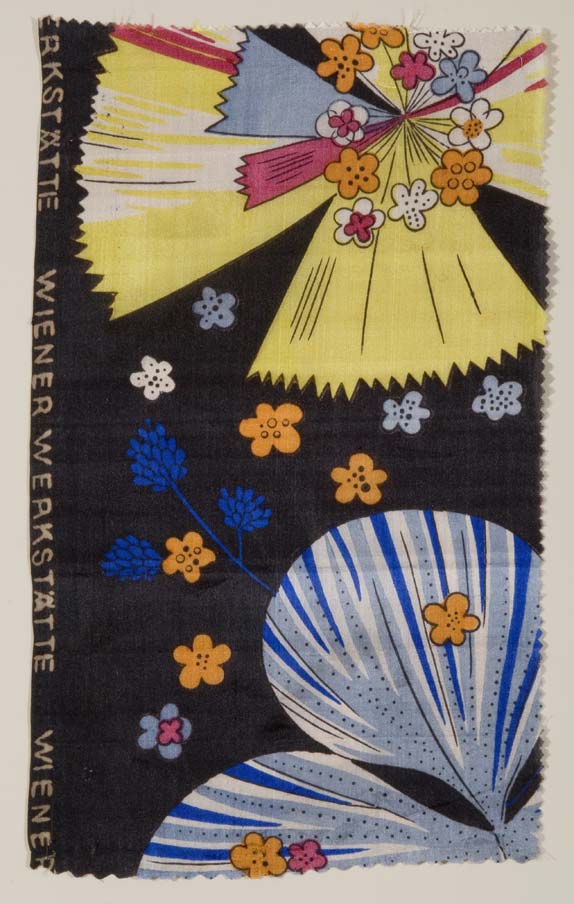
WASHINGTON, DC.-Join The Textile Museum in celebrating the splendor of turn-of-the-century Vienna, Austria in Textiles of Klimt’s Vienna, on view through January 6, 2008. Experience the vibrant art and social scene of Vienna at the dawn of the 20th century, led by painter Gustav Klimt and other artists, through the display of original material and photographs.
Focusing on the era’s Secession movement and Wiener Werkstätte (Vienna Workshop), this exhibition examines the artistic values and aesthetic development of the period through textiles. The Textile Museum creates an intimate, focused exhibition that highlights the period’s dramatic transformation of European art as artists began to rebel against traditionally accepted styles and media and to create new forms of art for a new era.
“As the foremost institution dedicated to textiles in the Western Hemisphere, we are pleased to present this exhibition highlighting the creative activity of the Secession movement and the Wiener Werkstätte,” said Daniel Walker, director of The Textile Museum and curator of Textiles of Klimt’s Vienna.
Goals of the Secession and Wiener Werkstätte Movements - Vienna was a center of creative activity between 1897 and 1932 with the emergence the Secession and the Wiener Werkstätte. The Secession movement challenged the prevailing conservative tendencies of the Vienna Art Academy’s exhibitions and encouraged a heightened sensitivity to and appreciation for culture and arts in everyday life. The line between fine and applied arts became blurred, and the concept of Gesamtkunstwerk (total artwork) was introduced. The Wiener Werkstätte was established to design and produce a full range of objects and furnishings for specific interiors in order to create a unified, harmonious ensemble.
The Workshop provided an outlet for the work of many artists in a wide variety of media – including architecture, graphic arts, painting, furniture, metalwork, jewelry, leatherwork, fashion and textiles. Textiles are one of the most resonant and revealing aspects of artistic creativity of this era and a key element in the realization of Gesamtkunstwerk.
Founding of the Secession and Wiener Werkstätte - Looking to the future and challenging the past, the Secession was founded in 1897 by a group of young artists that included the architect Josef Hoffmann, the painter Koloman Moser and the painter Gustav Klimt, who was elected its first president. An engraving at the entrance to the Secession building in Vienna conveyed the philosophy of the group: "To every age its art and to art its freedom.” The year 1903 brought the establishment of the Wiener Werkstätte by Hoffmann and Moser along with their financial backer, Fritz Wärndorfer. In an effort to recapture the aesthetic values of the pre-industrial era, the artists of the Wiener Werkstätte aspired to create well-designed, handcrafted objects and to consolidate design, production and distribution within one organization. Wiener Werkstätte participants designed Secession exhibitions, commissioned paintings from Secession artists for their interior design projects, and created the environments and clothing in which Klimt and artistic Viennese society moved.
Textiles of Klimt’s Vienna includes 58 textiles and related objects, including fabric samples, a sample book, fabric covered books, and boxes created by artists Josef Hoffmann, Dagobert Peche, Maria Likarz-Strauss and others. The definitive text on the subject, Angela Völker’s Textiles of the Wiener Werkstätte1910-1932, serves as an accompaniment to the exhibition and will be available for purchase in the shop.
The objects on view are drawn primarily from the collection of Lloyd E. Cotsen, renowned businessman, collector and philanthropist as well as a former member of The Textile Museum’s Board of Trustees. Cotsen is the recipient of the Museum’s 2007 George Hewitt Myers Award. Named for The Textile Museum’s founder and presented by the Museum’s Board of Trustees, the award for lifetime achievement recognizes his exceptional contributions to the study and understanding of the textile arts. Cotsen’s longstanding support of The Textile Museum includes founding of The Lloyd Cotsen Textile Documentation Project and the endowed Lloyd Cotsen Curatorial Scholarship Fund.
Works on Display - Curated by Daniel Walker, Director of The Textile Museum, the exhibition will be presented in four sections. Three of the four sections highlight the work of individual artists of the Secession and the Wiener Werkstätte.
One section of the exhibition focuses on architect Josef Hoffmann (1870-1956), a founding member of both the Secession and the Wiener Werkstätte. As director of the Werkstätte, Hoffmann designed textiles, furniture, and other objects. Hoffman’s best-preserved Gesamtkunstwerk, the Palais Stoclet in Brussels, Belgium, encompasses his architecture, furnishings and textiles along with mosaics by Klimt. “Showing great range in style over his long and productive career, Hoffmann’s best-known and most highly regarded textile designs are straightforward and seemingly simple geometric patterns in two colors,” said Walker.
Another section showcases the work of Dagobert Peche (1893-1923), a prolific artist in many media who designed more than113 fabric patterns for the Wiener Werkstätte. His patterns are recognized for their distinctive style that typically features the delicate representation of naturalistic forms, sometimes in large-scale repeats. Textiles of Klimt’s Vienna will highlight the graphic effects and fine-line drawing that distinguish Peche’s designs.
The third section contains pieces by Maria Likarz-Strauss (1893-1956). According to Walker, “she was the most active textile designer in the workshop [Wiener Werkstätte], with almost 200 designs attributed to her.” Likarz-Strauss had a broad stylistic range that incorporated the stylized floral elements associated with Peche with the formal geometric patterns that originated with Hoffman. Yet, she is most well known for her abstract patterns with infinite repeats, which reflect the international trends that led to the Art Deco Style in the years after Klimt’s untimely death in 1918.
Completing the four sections of the exhibition is a survey of the full range of textile designs that were born from the Secession aesthetic movement and the Wiener Werkstätte.
Using works from various artists, including Koloman Moser, Carl Otto Czeschka, Eduard Wimmer-Wisgrill – the first head of the Wiener Werkstätte’s fashion department – Mathilde Flögl and Felice Rix-Ueno, among others, this section will emphasize the variety of textiles and their stylistic evolution over time.
The Textile Museum will concurrently present two other exhibitions this fall focusing on collecting and collectors. Ahead of His Time: The Collecting Vision of George Hewitt Myers examines the collecting philosophy of The Textile Museum’s founder, while Private Pleasures: Collecting Contemporary Textile Art showcases contemporary textiles drawn from private collections in the Washington, D.C. metropolitan region; both exhibitions open September 28, 2007. Textiles of Klimt’s Vienna, made possible by the generous loan from Lloyd E. Cotsen’s personal collection, continues the theme of collecting present throughout all the fall exhibitions. In conjunction with the exhibitions, the Museum will present The TM Fall Symposium from October 19 through 21 on the topic The Collecting Passion.