苏黎世艺术展览馆展出克里斯托夫•威廉姆斯作品
苏黎世艺术展览馆即将到来的下一个展览致力于展出美国概念派艺术家克里斯托夫•威廉姆斯作品。在一个广阔的展览空间里,威廉姆斯不仅在展览馆里展出他的作品,即28张该艺术家的系列照片,例如《关于工业社会的十八节课》(修订版)(2003年至今),而且还有无线电节目,丹尼尔电台---由威廉姆斯和艺术家兼评论家约翰•凯尔西构思而成,2007年初第一期节目在波洛尼亚开播---已经扩展到了苏黎世并与劳拉电台合作,将在展览期间的从周日到周三每晚播出。另外,克里斯托夫•威廉姆斯正在与阿尔伯特•厄伦和约翰•凯尔西合作一个电影项目,观众将在艺术院线中的任何一家影院中可以看到。克里斯托夫•威廉姆斯生于1956年,生活和工作在洛杉矶,70年代在加利福尼亚艺术学院师从于第一代概念派艺术家如约翰•巴尔德萨利和道格拉斯•胡布勒。 与第一代概念派摄影家不同,威廉姆斯用极致和完美来增强他的作品效果。他的摄影过程与工业社会及其短暂性有关,并且做出评论。视自己为照片的导演再经专业人士制作,艺术家用现在很少有人再用的方法---即黑白两色的完成如同银胶和白金印记,颜色像染料加工一样被附着于上---将拍摄照片打印出来。
第一眼看到他的模特沐浴图系列# 105M – R59C(2005)似乎让人回忆60年代的广告摄影。但是再看一眼就会觉得这个模特要比广告行业中的正常情况要年长许多。大多数情况下,她在摄像机镜头前都摆出笑的姿势;另外的作品中她则凝视画面之外,陷入思索。只有一半的影像汇聚在她脸上,另外一部分则拍摄沐浴设备及彩色的条纹内衣。他的作品Kiev 88 (2003)复制了俄国最成功的摄影模特海色布拉德。威廉姆斯称,对于他来说,这种复制就像是“利用美国的技术来描绘一个鱼叉”。结果专业性很强的“广告”与模特的简单形成了鲜明的对比。此外他的作品Velosolex 2200 Nr. 2 (2005)系列和《热带房屋》(2005)----融入了客体肖像的美学概念---是政治和地缘问题扮演角色的进一步参照。Triptychon Velosolex 2200 Nr. 2展现了从三个不同角度的自行车,《热带房屋》(2005)讲述的是一个洲际间旅行的故事。
虽然在形式上客体的美学概念是作品的中心,但是威廉姆斯却用他照片所要阐述的题目搅乱它:首先,在一个隐藏的清单里,所有和照片有关的信息都被聚集到了一起---照片内容的详细资料、照相室的名称、日期、材料和工序。然而有一点特别的却丢失了---那就是拍照摄影人的名字。因此威廉姆斯把信息和作者拥有什么价值这个问题交由我们处理,同时他被证明是一个有着揭露隐藏轶事弱点的微妙的解说员。
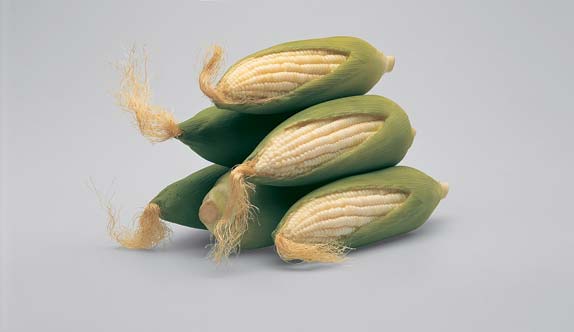
ZURICH.- The coming exhibition at Kunsthalle Zurich is dedicated to the U.S. conceptual artist Christopher Williams. In an expansion of the exhibition space, Williams presents his works not only in the Kunsthalle itself, where 28 photographs of the artist from the series For Example: Dix-Huit Leçons Sur La Société Industrielle (Revision) (2003 to today) are on show. Also the radio programme Radio Danièle – that the artist conceived with the artist and critic John Kelsey, a first version of which was realized in Bologna at the beginning of 2007 – has been expanded for Zurich in collaboration with Radio LoRa and will be broadcast every night from Sunday to Wednesday for the duration of the exhibition. In addition, Christopher Williams is collaborating with Albert Oehlen and John Kelsey on a film programme, which can be seen in one of the Arthouse Cinemas.
Christopher Williams (*1956), who lives and works in Los Angeles, studied in the 1970s at the California Institute of Arts under the first generation of conceptual artists on the west coast – among others under John Baldessari and Douglas Huebler. In contrast to the first generation of conceptual photographers, however, Williams mobilizes perfection and aesthetics to enhance the impact of his works.
Williams’ photographs, videos, installations, sculptures and performances study the conditions of presentation and representation and call into question spoon-fed perception and true-to-reality reproductions: how do our communication mechanisms and aesthetic conventions influence our perception and understanding of reality?
The title of the project begun in 2003 - For Example: Dix-Huit Leçons Sur La Société Industrielle (Revision) – alludes to the lectures "Dix-Huit Leçons Sur La Société Industrielle" held by the French sociologist Raymond Aron and published in 1962. In them Aron had studied the growth factors of Fordist capitalism and Soviet planned economy.
Williams’ photographic procedure relates to industrial society and its short-lived nature and, at the same time, formulates a critique. In this way the artist – who sees himself as a director of his pictures and has his photographs produced by professionals – has the shots printed by a method that is hardly in use today: his black-and-whites are realized as silver gelatine or platinum prints, the colour proofs by a dye-transfer process. His choice has nothing nostalgic about it; he understands it as an attempt to fully comprehend processes that are on the verge of disappearing. This theme is reflected in his repertoire of images that borrow from advertising, fashion and architecture photography. The formal common ground of his works is the isolation of the objects against a mostly neutral background.
The proximity to New Objectivity (neue Sachlichkeit) and William’s admired predecessor, Albert Renger-Patzsch (1897-1966), is striking. Similar to him, Williams tries to constitute the structures and phenomena of the visible world in their "essence" – via photography. However, a closer look reveals that disquieting factors have obviously and consciously been introduced. The pictures are meant to evoke a subtle shift in our perception, not least of all abetted by their titles, which are to be considered a part of the work.
At first glance the series of shower pictures Model # 105M – R59C Kestone Shower Door... (2005) seems to recall advertising photography from the 1960s. But a second glance makes apparent the fact that the model is a bit older than is normally the case in the advertising field. For the most part she smiles as she poses before the camera; on other works she stares out of the picture, lost in thought. Only one half of the image formation is given over to her face; the other half is taken up by the shower stall or colour chart stripes. That small skin blemishes remain visible is owed to the fact that Williams never refinishes the photographs.
His work Kiev 88 (2003) pictures the Russian remake of a Hasselblad, the most successful model of a middle-format camera. Williams remarked that, to him, this remake is like "using NASA technology in order to represent a harpoon." Consequently the professionalism of the "advert" stands in contrast to the simplicity of the model.
Also in the works Velosolex 2200 Nr. 2 (2005) and Tropical House (Prototyp) (2005) – along with the aesthetic concept of the objective portrayal – further references to political and geopolitical questions play a role: Triptychon Velosolex 2200 Nr. 2 shows a bicycle from three different views. In the French colonies of Africa and Asia, this bike was a popular model. Legend has it that the bicycle was imported to France from Vietnam to be then photographed in a studio in Los Angeles. Also Tropical House (Prototyp) tells of an intercontinental journey: in 1949 the French architect Jean Prouvé designed the "Tropical House" as a prototype of an easy-to-erect prefabricated house for cheap living quarters in the French colonies. There they stood proud in Brazzaville till 1999 when they were "rescued" from the civil war in the Congo and sent back to France for restoration. In 2005 one of the houses was shipped to Los Angeles for an exhibition in UCLA’s Hammer Museum, where this photograph was taken during an exhibition.
Although, formally, the aesthetic concept of objectivity is central here, Williams subverts this with the title he formulates for the picture: in an, at first, cryptic list, all possible information that can be linked to the photo was assembled – details of the photographed object, name of the photo studio, date, material and process. Yet one particular is missing – the name of the photographer who took the picture. Thus Williams puts at our disposition the question of what value the information and the authorship can possess, while he simultaneously proves to be a subtle narrator with a weakness for veiled anecdotes.
In Bologna on January 26th 1976 one of the first free radio stations in Italy went on the air: Radio Alice. In 2007, parallel to an exhibition at Bologna’s Galleria d’Arte Moderna, Christopher Williams together with John Kelsey organized Radio Danièle in memory of Radio Alice and as an homage to the French director Danièle Huillet (1936-2006). The two organizers invited more than 60 artists, among whom were Bernadette Corporation, Dan Graham, Paul McCarthey, Seth Price and Lawrence Weiner, to compose a contribution for the radio. These ranged from readings, music tapes and concerts, all the way to experimental sound recordings. On "Radio LoRa 97,5 – alternative local radio Zurich" this program will be taken up and continued for the duration of the exhibition in an expanded Zurich version.
Within the framework of the Cologne Film Festival 1992, Albert Oehlen and Christopher Williams were invited to design a film programme in which each film shown – like a dialogue – offered an answer to the preceding one: Albert Oehlen began the screening on September 27th with Change by Peter Wirth from 1971; it culminated in Hermann Jauk’s Stille Nacht O Tannenbaum from 1967. This dialogue will be expanded and continued in Zurich’s Arthouse Cinemas.